My gardening journey began more than 20 years ago. I was interested in learning how to garden, so I began researching and experimenting and learning as much as I could where I could. Fast forward more than two decades. Working with plants has become a passion. I’ve bought a lot of plants over the years. A lot. I have created many perennial beds and even more container gardens. I’ve grown small herb and vegetable gardens. In recent years, I’ve planted some shrubs and more than a dozen trees. Suffice it to say, I’m an experienced gardener.
This year, though, I expanded my gardening efforts widely. At the start of the year, my husband and I decided we would put in several new raised beds, and I would grow a lot of our own produce. I aimed to grow organic fruit, herbs, and vegetables, as well as select flowers, mostly from seed. I also wanted to make a small orchard in our suburban, HOA-confined yard. I intended to plant an abundance of containers and create new perennial garden beds in our border. I envisioned our yard to be an inviting, tranquil oasis for us in summer and fall. To create the lush garden haven I had in mind meant I needed to start planning in mid-winter.
Extensive Planning
I enjoy most aspects of gardening (let’s be honest, weeding not so much), but I absolutely love the planning process. It’s creative. There’s a level of pleasurable anticipation thinking about the garden you want to make. It’s an intellectual challenge to consider all the things you want to grow and figuring out if they’ll suit your garden zone and if so, where to grow them.
Each garden is its own microclimate. For example, I’m in USDA garden zone 5b (when I started gardening here, it was 4b, so no one can come at me about climate change; I’ve experienced it first hand) in a suburban yard. My front yard faces north; my backyard faces south. The neighbor directly behind me has mature trees, which means my back border is largely shaded for much of the day, but the sun’s east to west path is nearly overhead in the summer, which means my back patio and much of the garden bake in direct sun. The part of the side yard by the house gets partial shade most of the time.
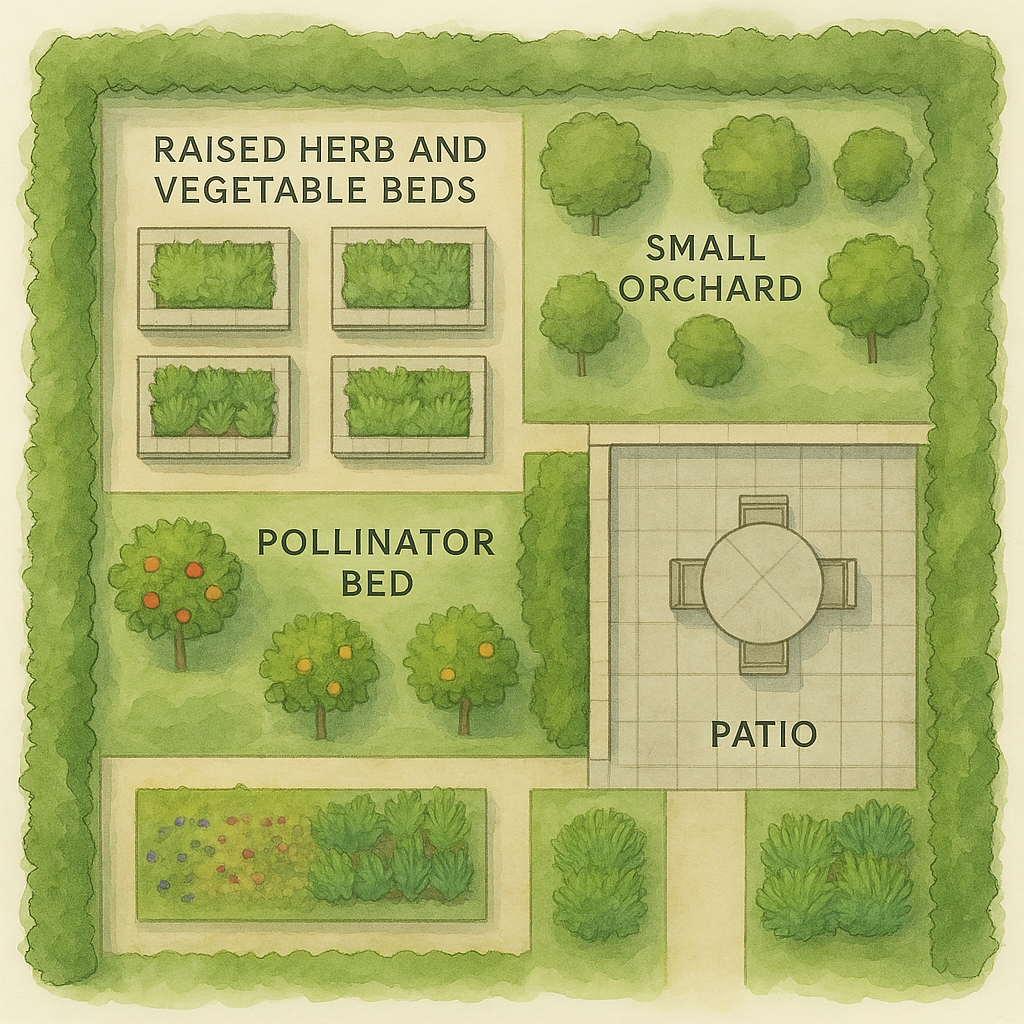
Given our HOA rules and in order to capture maximum sunlight, my raised bed garden would need to be situated in our oddly shaped backyard, not the side yard where there is more room. Planning it was as if I were creating my own living puzzle, fitting the beds in the best configuration to maximize growing space not only for this year but for the future.
I also needed to think about where to place the fruit trees. We need to create shade around our patio, so that was a consideration. However, after consulting with a family friend whose cousin owns an orchard, I opted for dwarf fruit trees–it’s what commercial orchards generally grow–and I would espalier most of them. We have a sunny corner along the south side of our garage, the expanse of which could easily accommodate four small trees that I would train on wires between two tall fence posts. The other I planned to put at the far corner of the back patio for shade as well as visual interest.
Before we could begin planting any seeds or plants, I first had to decide what we were going to grow. When it comes to herbs, fruit, and veg, it’s very important to grow what you like. You waste time, money, and precious garden space if you grow something you don’t want to use.
Quite an extensive list grew. Vegetables, herbs, fruit, lettuce greens, edible flowers, even some annual flowers, these I would attempt to grow from seed. Other things, like the fruit trees, berry bushes and potato sets, I would source from reputable growers.
Once I decided what I wanted to grow, I had to prioritize plants and allocate space. I created several iterations of a garden map. I started on paper, but then as I revised and formalized my plans, I used a spreadsheet — I could also have used graph paper — to create a map to scale.
For my raised herb and vegetable garden beds, I used the 1×1 method where I calculated how many plants I could grow in a 1 square-foot space. Especially because I’m using raised garden beds, I had to take into consideration what grows well together and what doesn’t; in other words, I used what’s called companion planting to inform my garden map.
I also had to consider what should be grown in pots instead of the beds. Some of the herbs and edible flowers I planned to grow tend to take over — they don’t play well with others in the proverbial sandbox — so they’re better grown in pots. I would need several new pots in different sizes, depending on the plant, too.
Once the overall plan was in place, it was time to start buying.